Introduction
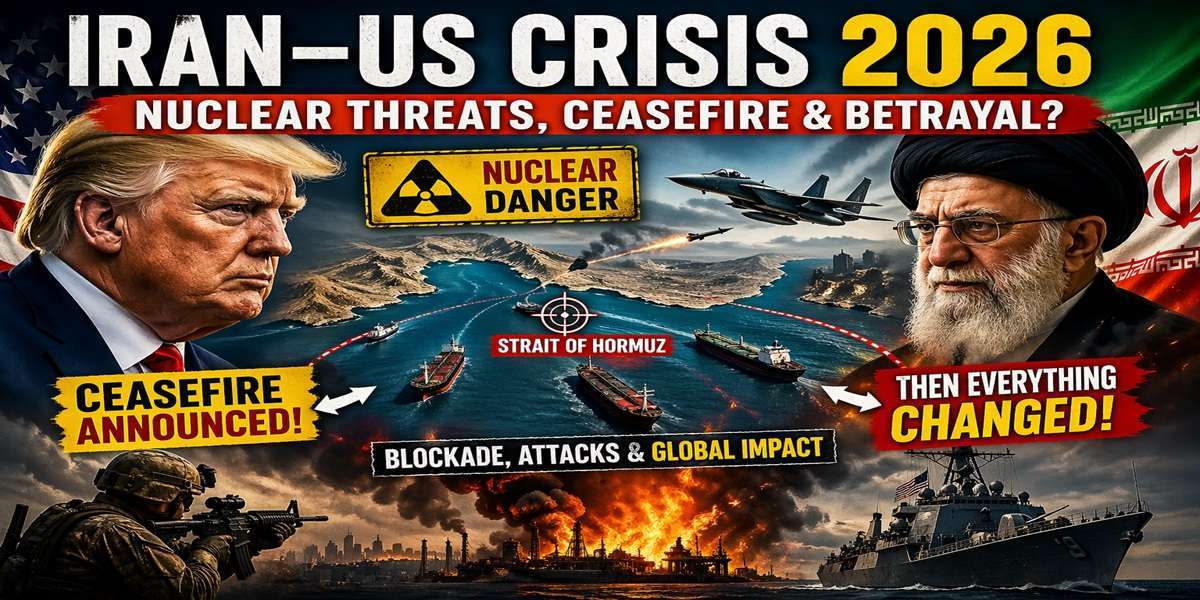
The world in 2026 is moving faster than ever. One day brings threats of nuclear war, the next a ceasefire, and the day after a military blockade. The recent tensions between the United States and Iran have shown just how fragile global stability has become.
In this blog, we break down the key events of the Iran–US crisis of April 2026, analyze what’s really happening, and explain why it matters for the entire world.
A World on the Brink of War
On April 7, 2026, global tensions reached a peak when former U.S. President Donald Trump issued a shocking ultimatum to Iran. He demanded that Iran reopen the Strait of Hormuz—one of the most critical oil routes in the world—or face devastating consequences.
For hours, the world feared the worst. Many believed a nuclear strike was imminent. Governments issued emergency warnings, and global markets braced for collapse.
Why the Strait of Hormuz Matters
The Strait of Hormuz is one of the most important shipping routes globally. Around 20% of the world’s oil supply passes through it.
- If closed → oil prices surge
- If attacked → global trade disruption
- If militarized → risk of world war
Iran’s decision to open, then suddenly close the strait again created chaos in global markets and diplomacy.
Brighton Humble Chelsea 3-0: Blues in Crisis as European Hopes Fade
Military Escalation and Nuclear Risks
The crisis intensified when nuclear facilities in Iran were targeted. One of the most alarming incidents involved the Bushehr nuclear power plant.
Had it been damaged, the consequences could have been catastrophic:
- Radioactive leakage
- Water contamination across the Gulf
- Long-term environmental disaster (similar to Chernobyl)
This wasn’t just a regional issue—it could have affected millions across multiple countries.
The Downing of a U.S. Fighter Jet
A major turning point came on April 3, when Iran shot down a U.S. F-15 fighter jet.
- One crew member rescued
- One missing for over 24 hours
- A high-risk covert rescue mission followed
The U.S. eventually rescued the officer, but not without losses and damage to multiple aircraft. This event shattered claims of total U.S. air dominance.
Sudden Ceasefire – But Not for Long
Just 90 minutes before a critical deadline, a two-week ceasefire was announced—reportedly mediated by Pakistan.
However, the situation quickly became complicated:
- Israel launched strikes on Lebanon
- Disagreements over ceasefire terms emerged
- Trust between nations weakened
Peace talks in Islamabad failed, mainly due to disagreements over Iran’s nuclear program.
Naval Blockade and Global Impact
After failed negotiations, the U.S. imposed a naval blockade on Iran. This escalated tensions further:
- Ships were stopped or redirected
- Oil trade disrupted
- China warned the U.S. against interference
Meanwhile, countries like India faced direct consequences, with ships being fired upon and forced to turn back.
How to Create Realistic AI Influencers for Free
Economic Shockwaves
The crisis had immediate global effects:
- Oil prices fluctuated dramatically
- Stock markets reacted sharply
- Trade routes became uncertain
Even a brief reopening of the Strait of Hormuz caused oil prices to drop by 10%, showing how sensitive the global economy is to this region.
Legal and Human Rights Concerns
Statements and actions during the crisis raised serious concerns:
- Threats against civilian infrastructure
- Accusations of potential war crimes
- Warnings from international organizations
Additionally, controversial laws and military actions in the region have further complicated peace efforts.
What Happens Next?
As ceasefires expire and negotiations stall, the key questions remain:
- Will the U.S. and Iran reach a long-term agreement?
- Will Israel align with any deal?
- Could this escalate into a larger regional or global conflict?
The situation remains highly unpredictable.
Why Understanding Global Events Matters More Than Ever
In a rapidly changing world, staying informed is no longer optional—it’s essential.
Today, tools like Artificial Intelligence are helping people:
- Analyze global events quickly
- Build businesses online
- Create content and presentations
- Stay ahead in careers and education
Those who adapt will thrive. Those who don’t risk falling behind.
Conclusion
The Iran–US crisis of 2026 highlights how quickly the world can shift from diplomacy to the brink of war. With nuclear risks, economic consequences, and geopolitical tensions at play, this is a situation that affects everyone—not just those in the region.
Staying informed, thinking critically, and leveraging modern tools like AI are now more important than ever.